

Agios Fokas Beach
Sun & Sea: The Best Beaches

Agios Fokas Beach – A Quiet Pebble Shore East of Kos Town
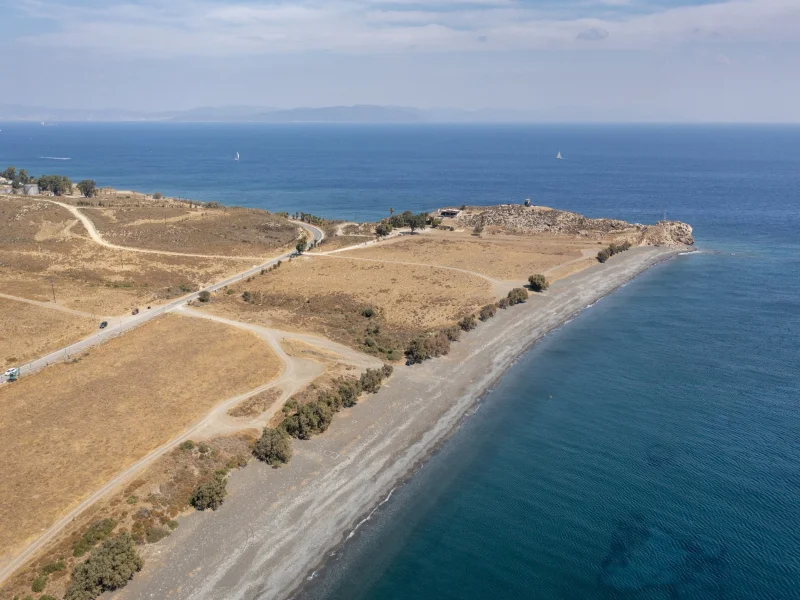
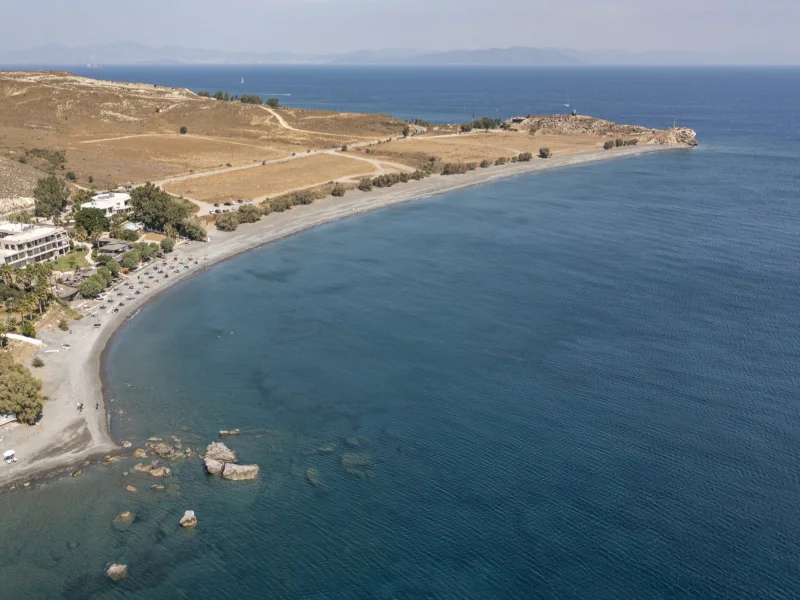
The road east of Kos Town follows the coastline closely, passing through Psalidi before reaching the quieter stretch of shore known as Agios Fokas. It is not a beach that announces itself — no large signs, no beach clubs, no rows of sunbeds visible from the road. What you find when you arrive is a pebble bay with clear water, a handful of tavernas, and the small whitewashed chapel of Agios Fokas perched on the hill above, which gives this place its name.
Agios Fokas draws a mostly local crowd: families from Kos Town who know the road, visitors staying nearby who want a swim without the effort of a longer drive. It is the kind of beach that rewards those who look for it.
The Beach
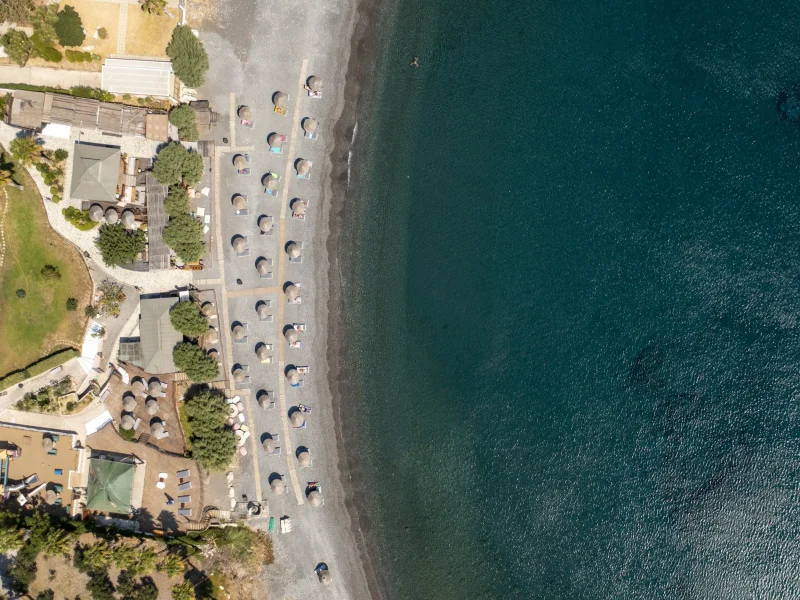
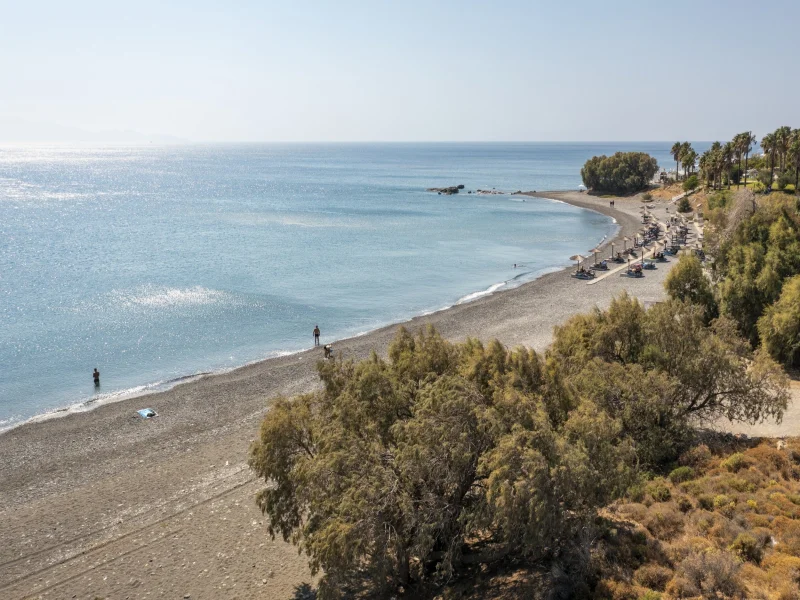
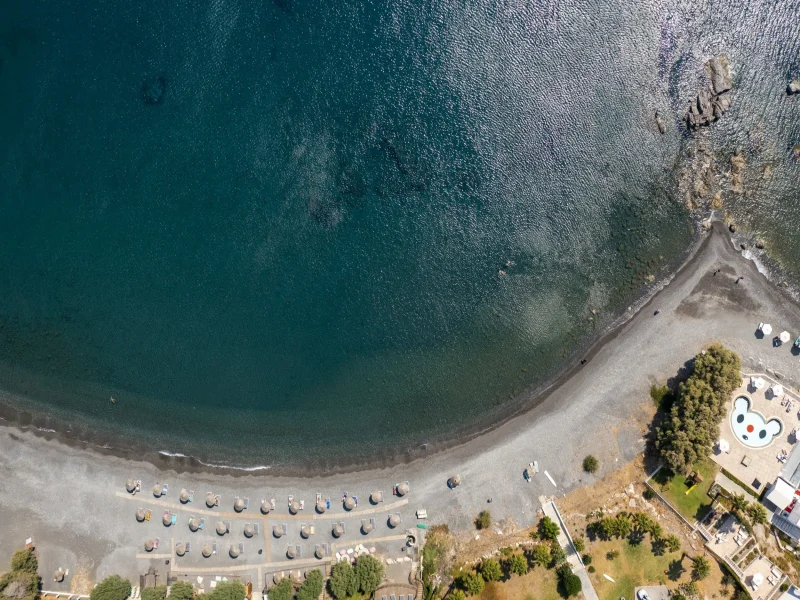
Agios Fokas is a pebble beach. The stones are smooth and rounded, worn to a comfortable texture by years of wave action, and the shoreline runs in a gentle curve. The water is clear from the outset — pebble beaches stir up little sediment, and the visibility here is consistently good even when the sea is slightly stirred by wind.
The depth increases gradually from the shore, making the entry comfortable for swimmers of most abilities. The water itself is open Aegean: clean, cool in spring, warm by midsummer, and refreshing well into October.
The beach is relatively narrow, without the wide sandy expanse of the more popular beaches on the island. It has a compact, intimate quality. There is shade from the hillside in the early morning and late afternoon, though midday sun reaches the whole beach directly.
Facilities are modest: a small number of sunbeds, a couple of tavernas and cafes behind the beach, and parking nearby. There are no water sports operators, no vendors, and no amplified music. The atmosphere is quiet by the standards of a Greek island in summer, which is the main reason most people come.
Swimming and Snorkelling
The water at Agios Fokas is among the clearer waters on this part of the coast, helped by the pebble seabed and the absence of boat traffic. Swimming conditions are generally calm, as the beach has some natural shelter from the prevailing winds.
The rocky areas at either end of the beach are the most interesting sections for snorkelling. The underwater rock formations provide shelter for small reef fish, sea urchins, and the occasional octopus. The visibility is good enough to explore with just a mask, though fins make it easier to cover more ground. Equipment is not available to hire here, so bringing your own is advisable.
For straightforward swimming, the central section of the beach is the most suitable, where the pebble floor gives way to sand further out and the depth increases steadily.
Getting There
Agios Fokas is about 9 kilometres east of Kos Town, a drive of roughly 18 minutes along the coastal road. The road is flat, well-maintained, and easy to navigate. It passes through Psalidi before continuing east toward Agios Fokas and the Therma area beyond.
Parking is available near the beach and is generally manageable outside peak season. In July and August, arriving early in the morning is advisable to secure a space close to the shore.
A bicycle or scooter works well for this distance. The road is not steep, the scenery along the coast is pleasant, and the round trip is short enough to feel like a leisurely ride rather than a commute.
💡 If you are undecided between Agios Fokas and Psalidi, the coastal road passes Psalidi first. You can check conditions at both beaches on the same drive before committing to one.
🏨 Koasis Boutique Apartments in Kos Town is a short drive from Agios Fokas Beach, well placed for exploring the quieter eastern coast of the island.
The Chapel of Agios Fokas
The small chapel above the beach is the reason this stretch of coast has a name at all. Dedicated to Saint Phocas, patron saint of sailors and gardeners in the Orthodox tradition, it is a modest whitewashed building in the typical island style, kept in good repair by the local community.
The chapel is not a major tourist site, but it gives the beach a sense of place that purely geographic names lack. From the hill where it stands, the view back over the bay and toward Kos Town is worth the short climb.
Best Time to Visit
May and June suit Agios Fokas well. The beach is at its quietest, the water has warmed enough for comfortable swimming, and the landscape around the eastern coast is still green from the spring rains. Early morning visits in late May feel almost private.
July and August are busier, though Agios Fokas never reaches the intensity of Lambi or Psalidi in peak season. The local character of the beach and the absence of tourist infrastructure keep it from becoming crowded in the way that more visible beaches do. Mornings before 10 AM remain calm even in August.
September and October are the most rewarding months. The sea retains its summer warmth, the light is softer and more flattering, and the beach returns to something close to its off-season quietness. Tavernas are still open, the water is excellent, and the atmosphere is relaxed in a way that high summer cannot quite manage.
Winter empties the beach entirely. The tavernas close, the road is quiet, and the sea is cold. The pebble shore and the chapel on the hill have their own austerity in winter, and the coastal walk has a solitary quality that some find appealing, but it is not a beach visit in any practical sense.
Nearby Attractions
Therma Hot Springs
A short drive east of Agios Fokas, the Therma hot springs are a natural geothermal site where warm mineral water flows into the sea. The experience is quite different from a beach visit: visitors sit in shallow rocky pools where the thermal water mixes with the sea, producing a warm soak in an open-air setting. It is a worthwhile stop to combine with a morning at Agios Fokas Beach.
🔗 Read more: Therma Hot Springs
Psalidi Beach
A few kilometres west toward Kos Town, Psalidi is a longer beach with a mix of sand and fine shingle. It has more facilities than Agios Fokas and is popular with windsurfers in the afternoon when the breeze picks up along this stretch of coast.
🔗 Read more: Psalidi Beach
Kos Town
The eastern road connects Agios Fokas directly to Kos Town, making it straightforward to combine a morning at the beach with an afternoon in town. The ancient agora, the castle of the Knights, and the waterfront are all within walking distance of the town centre.
🔗 Explore: Ancient Agora
Practical Notes
- Water shoes are useful on the pebble shoreline, particularly near the rocky sections at the edges of the beach.
- Shade is limited at midday. The hillside provides some natural shade in the morning and late afternoon. Bringing a beach umbrella gives you more flexibility.
- Snorkelling gear is not available to hire at the beach. If you plan to explore the rocky sections, bring your own mask and fins.
- Tavernas near the beach serve straightforward Greek food: grilled fish, salads, cold drinks. The quality is consistent and the prices are reasonable by island standards.
- Early mornings are the best time to visit in summer. The beach is often empty before 9 AM, the water is calm, and the light on the pebbles and the chapel above is particularly good.
🏨 Koasis Boutique Apartments offers comfortable accommodation in Kos Town, within easy reach of Agios Fokas and the rest of the island's eastern coast.