Island Hopping from Kos: The Best Day Trips and Overnight Options
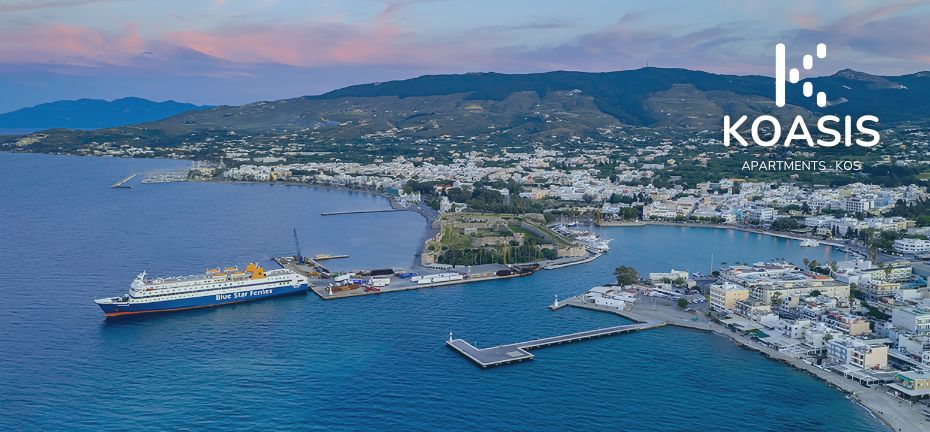
Kos sits at a useful crossroads in the southeastern Aegean. Within an hour by fast ferry, you can reach a volcanic island with an active crater, a rock-climbing destination used by professionals across Europe, and the Turkish coast. Within two hours, you have access to some of the most dramatic scenery in the Dodecanese. This is not accidental geography. Kos has functioned as a regional hub for centuries, and the ferry infrastructure reflects it.
This guide covers the realistic island hopping options from Kos: what is reachable in a day, what is worth an overnight, how to get to each place, and what to expect when you arrive.
Why Kos Works as a Base
Most people island hopping in Greece make the mistake of trying to cover too much ground. Moving between islands every day or two means spending a significant portion of your trip on ferries, arriving in unfamiliar places with luggage, and never quite settling anywhere.
Kos offers a different model. Kos Town is compact, walkable and well-connected, with its own beaches, archaeological sites, and restaurant scene strong enough to carry a full trip. The ferry connections from the main harbour let you treat nearby islands as day trips rather than destinations you have to commit to. You leave your apartment in the morning, spend the day somewhere entirely different, and return to the same bed in the evening.
KOASIS
YOUR STAY IN KOS TOWN
Explore Kos. Stay in the Heart of It.
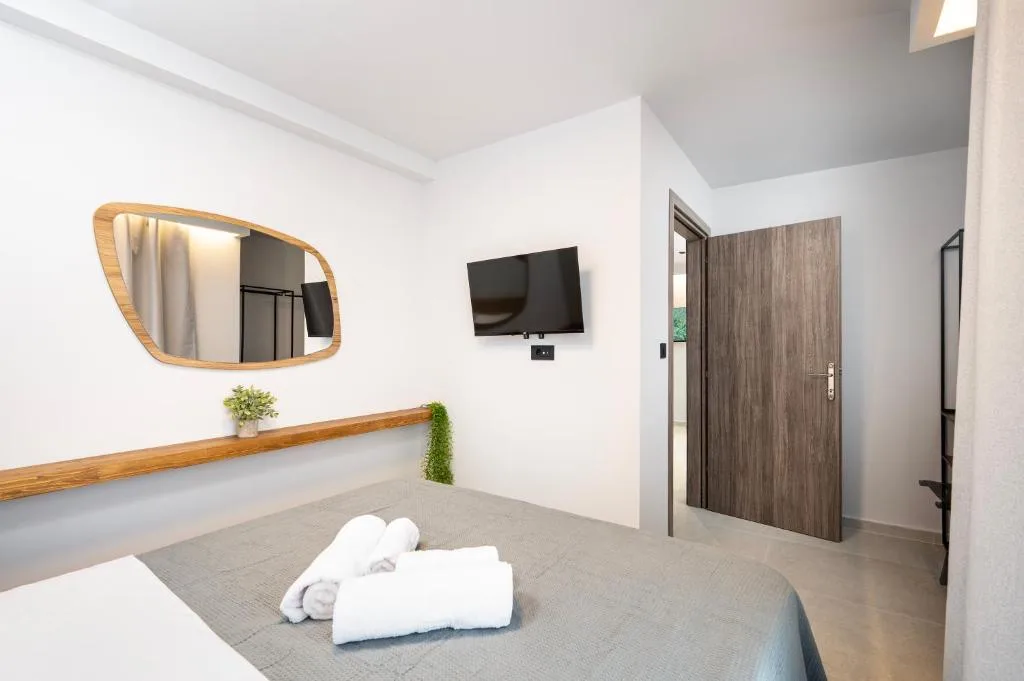
11 smart boutique apartments in central Kos Town, minutes from the beach, Old Town and ferry ports. Fresh, fully equipped spaces, a smarter stay with the Koasis app, and personal assistance whenever you need it.
 5 Stars
 Featured
 Exceptional
 Excellent
The island hopping options from Kos divide roughly into three categories: the volcanic island of Nisyros, the climbing and diving destination of Kalymnos, and the longer crossings to Patmos, Tilos, Rhodes and the Turkish coast at Bodrum.
Nisyros
Nisyros is the most distinctive excursion available from Kos, and for most visitors it is the one that produces the strongest memory of the trip.
The island is an active volcano. Not metaphorically or historically: the crater at Stefanos, in the caldera at the centre of the island, is venting sulphur dioxide and is warm to the touch. You can walk down into it. The ground is a pale yellow-white, cracked and alien, and the scale of the caldera walls around you removes any sense of scale you arrived with.
The ferry crossing from Kos harbour takes between 40 minutes and an hour depending on the vessel. Ferries run daily through the summer season, with multiple departures on busy days. The usual approach is to take the morning boat, spend a few hours in the caldera and the village of Nikia above it, eat lunch in Mandraki, the main port village, and return on the afternoon ferry.
Mandraki itself is worth more than a passing glance. The village is built on a cliff above the sea, with houses painted in deep ochre and white, narrow lanes, and a Byzantine castle at the top. The combination of the volcano and the medieval architecture makes Nisyros unlike anything else in the Dodecanese.
The excursion can be done independently by taking the scheduled ferry and hiring a local taxi or bus at the port to reach the caldera, which is not within walking distance. Or it can be booked through one of the many excursion boats operating from Kos harbour, which handle the logistics and include a guide.
Kalymnos
Kalymnos is Kos's closest neighbour to the north, 40 minutes by fast ferry. It has a different character from Kos: hillier, less developed for mass tourism, and internationally known for one specific thing. The limestone cliffs above the village of Massouri have made Kalymnos one of the most respected sport climbing destinations in the world, drawing climbers from across Europe and beyond through the spring and autumn seasons.
If you climb, the reason to visit is obvious. Hundreds of bolted routes across a range of grades, with the sea visible from most of the crags and the rock quality consistently good. The main climbing area is a short walk or taxi ride from the port.
If you do not climb, Kalymnos still makes a good day trip for different reasons. The island has a working harbour town in Pothia that feels less oriented toward tourists than most places of similar size in the Dodecanese. The sponge diving tradition that sustained the island for generations is still visible in the harbour and in a museum dedicated to it. The road north from Pothia passes through a landscape of terraced hillsides and villages with a character distinct from the flatter, more agricultural terrain of Kos.
Vathi, a deep fjord on the east coast of the island, is one of the more striking natural features in the Dodecanese: a narrow, kilometre-long inlet with steep green walls and a small village at its end. A boat trip into Vathi from Pothia, which can be arranged locally, is worth the additional hour.
Patmos
Patmos requires a longer commitment than Nisyros or Kalymnos: the crossing from Kos takes around two to two and a half hours by fast ferry, which makes it a full-day excursion at minimum and arguably better suited to an overnight.
The island is one of the most significant religious sites in the Orthodox world. According to tradition, the apostle John wrote the Book of Revelation here, in a cave on the hillside above the port. The Monastery of Saint John the Theologian, which dominates the summit of the hill above Chora, was founded in 1088 and has been continuously inhabited since. The library holds manuscripts of extraordinary age and value.
None of this requires religious belief to appreciate. The monastery architecture, the views from the summit, the medieval lanes of Chora below it, and the general sense of a place that has been considered important for a very long time combine into something that rewards the crossing. The beaches on Patmos, particularly Psili Ammos in the south, are among the better ones in the Dodecanese.
If you are spending a week in Kos and have one day available for a longer trip, Patmos is the strongest candidate. The ferry schedule typically allows for a departure from Kos in the morning and a return in the evening, which gives around four to five hours on the island.
Tilos
Tilos sits between Kos and Rhodes and appears on fewer itineraries than it deserves. The island is small, quiet, and has committed seriously to environmental sustainability in ways that are practically visible: the landscape is largely undeveloped, the roads are used by as many goats as vehicles, and the pace is slower than almost anywhere else in the Dodecanese that is accessible by regular ferry.
The main village of Livadia has a waterfront, a few tavernas, and not much else in the way of organised tourism. This is the point. The beaches on Tilos are uncrowded even in peak summer. The walking trails through the interior pass through terrain that feels remote in a way that is difficult to find on more visited islands.
The crossing from Kos is around one and a half hours. Tilos works well as a day trip for visitors who specifically want to spend a day somewhere quiet, but it also makes a reasonable overnight destination for those who want to break up the pace of a Kos-based trip.
Rhodes
Rhodes is the largest island in the Dodecanese and one of the most visited destinations in Greece. The ferry from Kos takes between one and a half to four hours depending on the vessel and the number of intermediate stops.
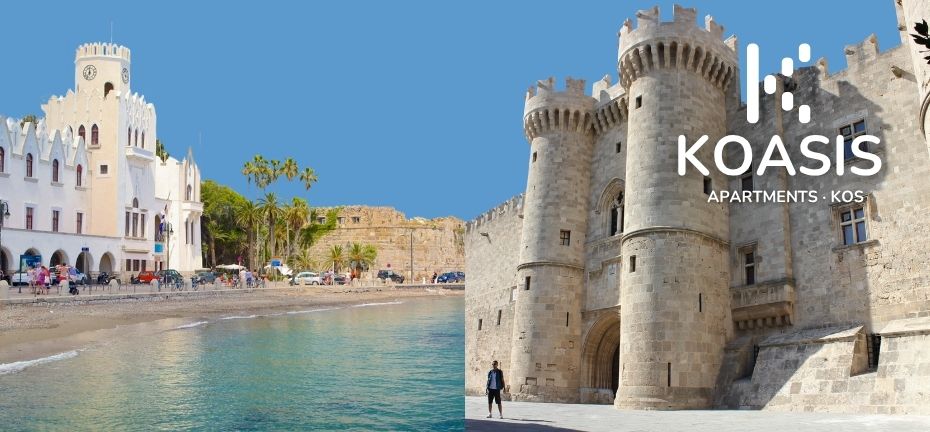
Whether Rhodes is worth a day trip from Kos depends on what you are after. The medieval city of Rhodes, a UNESCO World Heritage Site, is genuinely impressive: the old town is the best-preserved medieval settlement in the Mediterranean, with the Street of the Knights, the Palace of the Grand Masters, and several kilometres of intact city walls. Spending a morning walking it and an afternoon in the old town is a reasonable use of a day.
What is less worth the crossing for a single day is the rest of what Rhodes is known for. The resort areas, the beaches, and the general tourist infrastructure are comparable to what Kos has, without the advantage of proximity.
For someone primarily interested in medieval history and architecture, Rhodes is a compelling day trip. For everyone else, the time is often better spent exploring the parts of Kos that get left out of a beach-focused trip.
KOASISBoutique Apartments · Kos TownCheck AvailabilityBodrum, Turkey
Bodrum sits directly across from Kos, visible from the waterfront on clear days. The crossing takes around one hour by hydrofoil and operates daily throughout the summer season.
Bodrum is a proper city, with a functioning old town, a well-known castle built by the Knights of St John, and a museum of underwater archaeology that is among the best of its kind in the world. The bazaar in the old quarter is worth time regardless of whether you intend to buy anything. The nightlife and restaurant scene is significantly larger than anything available on Kos.
The logistics require some planning. You will need a valid passport and may need a visa depending on your nationality. The boat typically leaves in the morning and returns in the evening, which gives around six hours in Bodrum. Check current entry requirements before travelling, as these have changed at various points in recent years.
The combination of the ferry crossing, a walk through the castle and the old town, lunch somewhere on the harbour, and time in the bazaar fills the day well. Bodrum is one of the more distinctive day trips available from any Greek island, and the directness of the crossing from Kos makes it more accessible than it would otherwise be.
Practical Information
Ferry schedules on all these routes run frequently from June through September, with some reduction in frequency from October onward. The main operators serving routes from Kos include Dodekanisos Seaways and Blue Star Ferries, with smaller excursion boat operators handling the Nisyros and Kalymnos routes.
Tickets for scheduled ferries can be bought at the port or through local travel agencies in Kos Town. For the Bodrum crossing, tickets are available at the port and require a passport at the time of purchase.
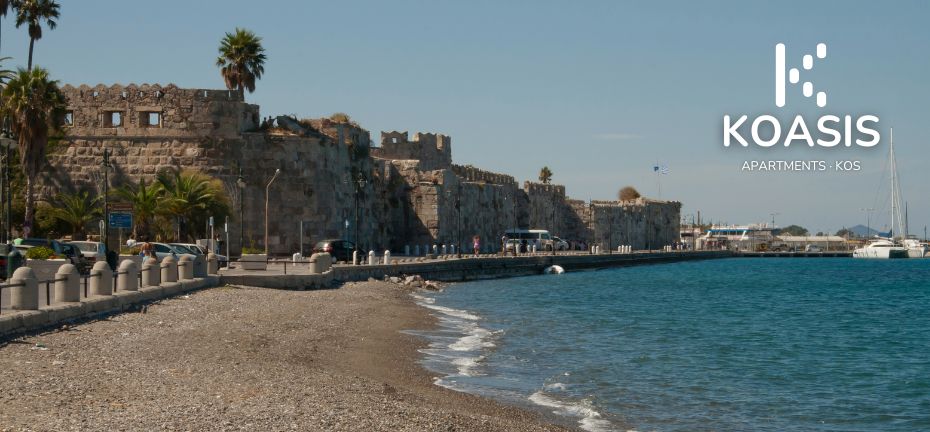
All departures leave from Kos Town harbour. Koasis is particularly well placed for island hopping: the Bodrum ferry terminal is a four-minute walk, and the main island ferry port is around eight minutes on foot. No transfers, no taxis.
The most practical approach to planning is to decide which islands interest you before you arrive, check the current schedule for those specific routes, and book the ferry tickets on or shortly after arrival in Kos. Booking too far in advance is rarely necessary outside of the busiest weeks of August.
How to Fit Island Hopping Into a Kos Trip
For a week-long trip based in Kos Town, one or two island hopping days is a reasonable proportion. More than that and you start spending more time in transit than in any single place.
Nisyros is the trip most worth doing if you only do one. Kalymnos is the better second choice for its different character. Bodrum is worth adding if the novelty of stepping into a different country for the day appeals to you.
Patmos, Rhodes, and Tilos work better for those with more days available or a specific reason to visit each.
The islands around Kos are part of what makes a stay in the Dodecanese different from a week spent somewhere self-contained. The connections are there, the crossings are short, and the variety available within a short radius is genuine. Using Kos Town as a base and treating the ferry connections as an extension of the trip rather than a commitment to a different destination is the approach that makes the most of both.